Wing
500kW

Edge AI Campuses
AI capacity depends on more than compute. Power, thermal conditions, communications and the site itself determine what can be established and what has to be engineered to make it work.
Engineering takeout
What can be engineered here is set by what the site can actually support.
Energy, power delivery, thermal conditions, communications and the ground itself decide the capacity a Campus can establish.
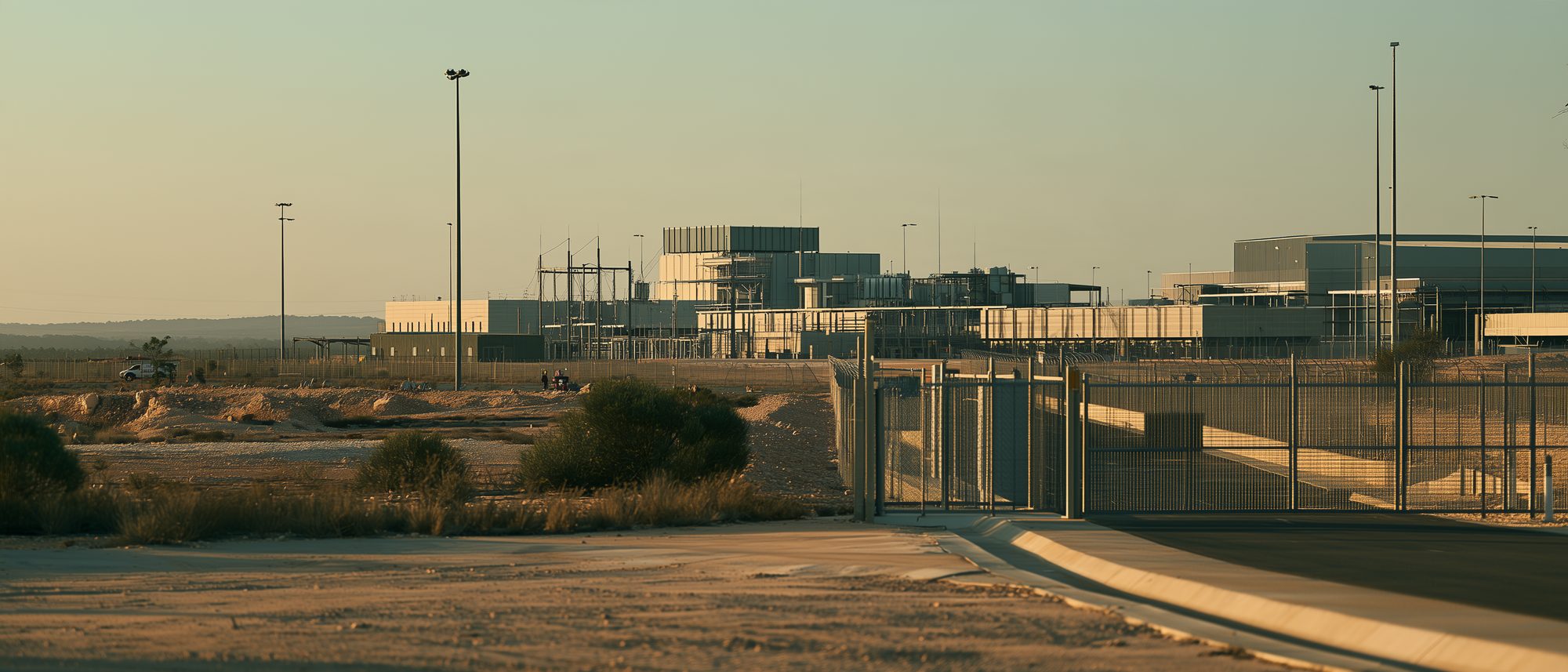
AI capacity is not always available where or when an operation needs it.
The site needs enough energy. Power has to be delivered at the required capacity and quality. Heat has to leave. Communications have to remain usable. The physical environment places its own demands on the infrastructure.
Every site is different. The architecture should not be.
CAMPUS engineering substrate
Power, thermal, compute and communications do not operate independently.
The power available affects the compute that can be supported. Compute density determines the heat that has to be carried away. Thermal conditions affect what can operate reliably. Communications determine how the capacity participates in the wider operation.
Treat those as separate decisions and somebody still has to own the interfaces between them.
EdgeQub holds those interfaces as one Campus architecture.
Power · Thermal · Compute · Communications
Power
Thermal
Compute
Communications
Resolved against each other, not specified separately
One engineered body. The division is analytical, not physical, and not a set of separately procurable products.
The parts are available. The resolution is the product.
CAMPUS energy precedence
AI capacity starts with the energy available to sustain it.
Before compute density can be determined, the engineering has to establish what energy is available, how power can be delivered and what the site can support.
ENGINEERING TAKEOUT
AI capacity is an energy decision before it is a compute decision.
CAMPUS thermal engineering
IceQub is proprietary EdgeQub technology engineered specifically for Edge AI workloads.
AI compute concentrates heat. How that heat can be carried away depends on compute density, ambient conditions and the physical constraints of the site.
IceQub establishes the thermal conditions the AI capacity requires as part of the Campus architecture, not as a cooling decision made after the compute has already been selected.
ENGINEERING TAKEOUT
Thermal capacity is engineered with the AI capacity, not added after the compute decision.
Conceptual representation · thermal path varies with engineered conditions
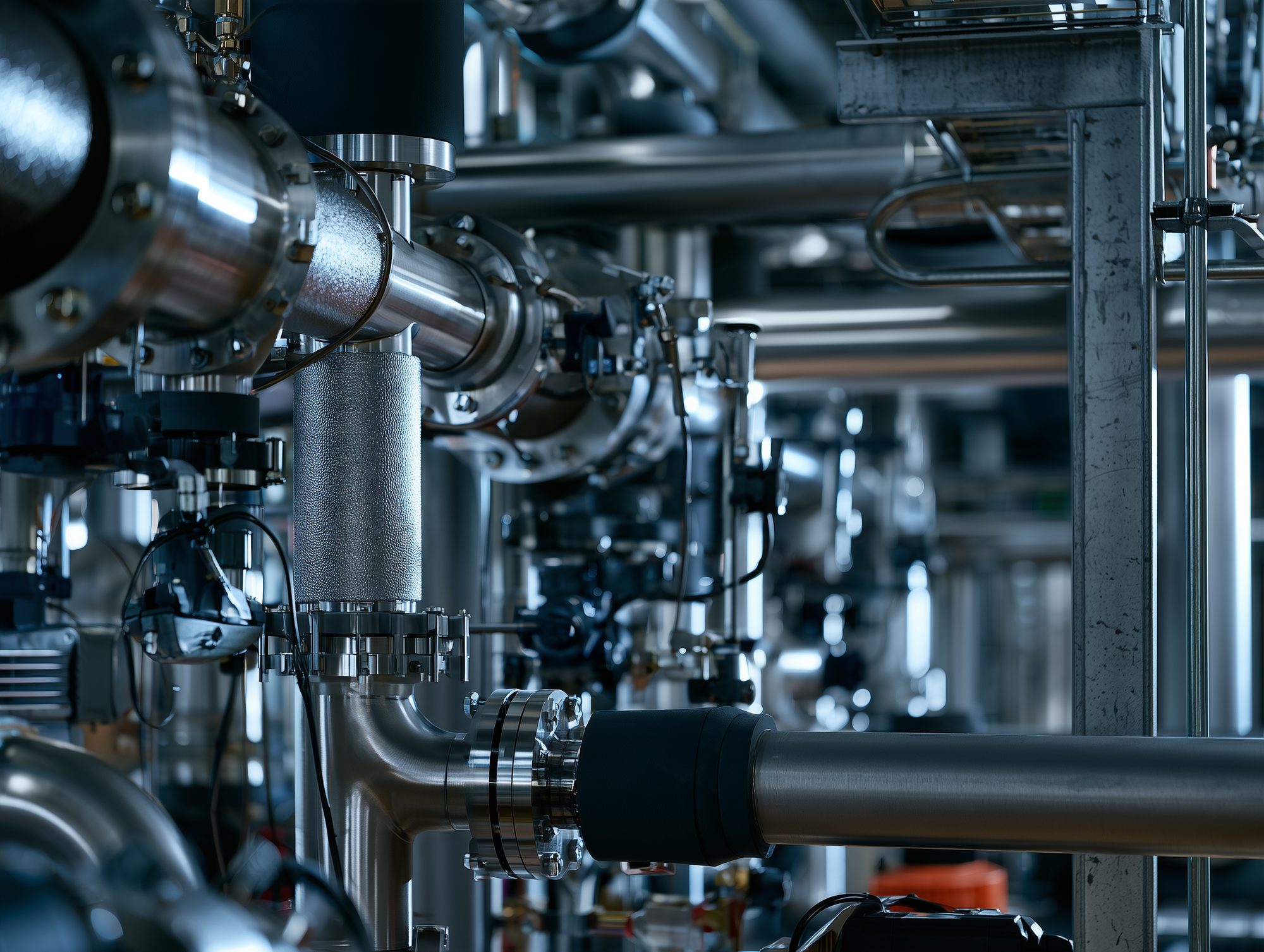
Every Campus follows a coherent EdgeQub architecture.
Where a component or configuration is already known, it can be standardised. Where energy, thermal conditions, communications, physical constraints or operating requirements differ, the engineering responds.
CAMPUS campus forms
500kW
1MW
~100MW
ONE CAMPUS ARCHITECTURE
Engineered for the capacity the requirement demands.
Wing, Block and Precinct are complete Campus forms.
CAMPUS data centre assurance
Data Centre Assurance
A data centre brings digital infrastructure, physical environments, energy and power systems into one operating environment. A weakness in one can create consequences somewhere else.
EdgeQub Data Centre Assurance brings those dependencies into one assurance view, from design and construction through commissioning and operations.
It underpins EdgeQub Wing, Block and Precinct implementations and can also be applied independently to fixed data-centre projects.
Secure the systems that control the environment, not just the systems that use it.
Data-centre cybersecurity crosses IT, operational technology and facility infrastructure. EdgeQub looks at the connections between them, where networks, identities, remote access, vendors and control systems can create exposure.
Assurance can extend across architecture and segmentation, privileged access, monitoring and detection, vulnerability management, third-party access, backup and recovery, and IT/OT integration.
Architecture · Networks · Identity · IT/OT · Monitoring · Vendor access
Protect the physical environment digital trust depends on.
Physical access, critical spaces, infrastructure and operational movement form part of the data centre's wider control environment.
EdgeQub brings physical security into the same assurance view as cyber, energy, power and operational systems, from the perimeter through controlled access to the critical environments inside.
Perimeter · Access · Critical areas · Detection · Monitoring · Operations
Power systems are part of the security environment too.
A data centre depends on systems that supply, control and distribute energy to critical workloads. Those systems can introduce digital control, telemetry, remote access and operational dependencies of their own.
EdgeQub brings energy and power expertise into the assurance problem, looking across power management, UPS and generator controls, facility systems, monitoring, communications and their cyber dependencies.
Supply · Delivery · Control · Telemetry · Resilience · Cyber-physical dependencies
AI infrastructure changes what has to be assured.
GPU-dense environments create different compute, network, management, power and thermal conditions. They need to be understood as an architecture, not treated as conventional IT at greater density.
EdgeQub assurance can extend into accelerator infrastructure, high-bandwidth fabrics, management and control planes, infrastructure processing such as DPUs, hardware-supported security controls, and the power and thermal dependencies surrounding AI workloads.
GPU + Accelerator · Fabric · DPU · Management plane · Hardware controls · Power + Thermal
Assurance follows the data centre into operation.
Risk changes as a project moves from design into construction, commissioning and live operation. Contractors leave. Temporary access disappears. Systems become interconnected. Operational responsibility changes hands.
EdgeQub carries assurance across those transitions, so security and control are considered as the environment becomes real, not reconstructed after commissioning.
Design → Construction → Commissioning → Readiness → Handover → Operations
Cybersecurity, physical security, energy, power and AI infrastructure are often assessed as separate disciplines.
The data centre does not experience them separately.
EdgeQub looks at the interfaces between them, where digital events can create physical consequences, physical access can create digital exposure, and the systems responsible for power and facility operation become part of the security environment.
You do not need an EdgeQub Campus to engage EdgeQub Data Centre Assurance.
The assurance disciplines that underpin Wing, Block and Precinct can also be applied to fixed data-centre projects, from design and construction through commissioning and operational transition.
CAMPUS qub-space
Rack space inside an engineered Edge AI Campus.
Qub-space gives customers access to rack capacity inside a Campus where EdgeQub holds engineering responsibility for the infrastructure around it.
The rack is only part of what matters. Power, IceQub thermal engineering, compute conditions and communications are resolved through the Campus architecture.
Outer boundary · the engineered Campus
Inner positions · Qub-space
ENGINEERING TAKEOUT
Qub-space gives AI infrastructure a place inside capacity that has already been engineered to support it.
Start with the conditions it has to operate within. EdgeQub can work with you to establish the site, energy, infrastructure and operating requirements that shape viable Qub-space.
CAMPUS category questions
Canonical clarifications
An Edge AI Campus is engineered specifically to establish AI capacity under the conditions of a site. Power, IceQub thermal engineering, compute and communications are resolved together around that requirement. It may share physical characteristics with data-centre infrastructure, but the Campus is defined by the AI capacity it is engineered to establish.
Qub-space is rack space inside an Edge AI Campus. The distinction is the engineered Campus around it: EdgeQub holds responsibility for resolving the infrastructure the AI capacity depends on.
No. Wing, Block and Precinct are complete Edge AI Campus forms for different capacity requirements: 500 kW, 1 MW and approximately 100 MW respectively. They are not stages in a progression.
No. EdgeQub maintains a coherent Campus architecture, standardising what is already known and engineering what the conditions of the site require.
IceQub is proprietary EdgeQub technology engineered specifically for the thermal requirements of Edge AI workloads. It enables thermal conditions to be resolved as part of the Campus architecture alongside power, compute and communications.
EQ
Perspectives from EdgeQub on energy, infrastructure, data, intelligence and the conditions changing how AI works in the real world.
We’ll send you new perspectives from EdgeQub as they’re published.
Your email has not been confirmed. Check your connection and try again.